We’ve seen technologies change rapidly over the last two decades; attitudes have shifted, and marketing techniques that were effective just a few years ago are now considered outdated.
In the early days, all we needed to consider was how a website looked on a computer monitor – that’s all changed. Now, a good website needs to work just as well on a mobile as it does on a laptop. This is what we call responsive design.
The Importance of UX and Design
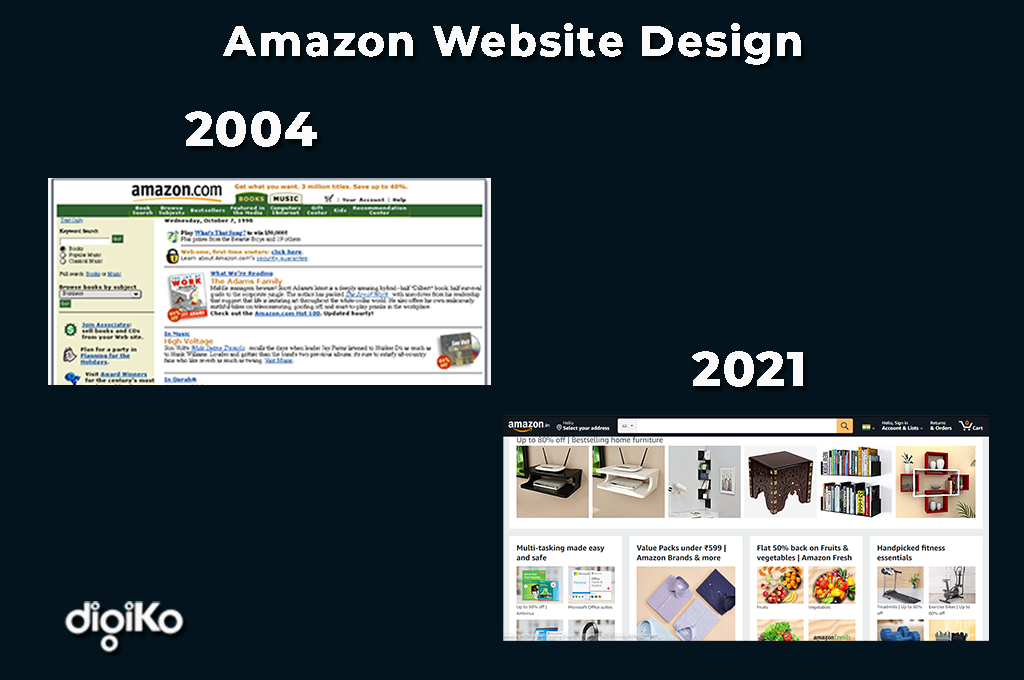
Users are a lot more aware than they were in 2000, and they rarely hang around on a website that is difficult to use, looks overcrowded, or is confusing. Any website’s UX (User Experience) and design have become critical components. For example, Amazon used to have a basic structure for its website. In old websites more data and messy-looking websites but nowadays maximum use of visual elements and graphics.

Putting Mobile First
Nowadays people spending maximum time on their mobile phones rather than on other devices. Now, a decent website must function equally well on a mobile device as it does on a PC. This is what we mean when we say “responsive design.” A designer should consider touchscreens while designing the website.

Speed and Optimization are Crucial
Every year, an increasing number of people get internet connection. There were approximately 361 million web users worldwide in 2000, compared to an incredible 4.57 billion people as of 2020. With such a massive increase in online traffic, maintaining high speeds becomes a real challenge. If a page loads too slowly, users will simply click away. Fast and seamless browser experience will keep audience engage for longer period of time. Website uploading time is playing a very important role, fantastic looking website with too long load up will result poor engagement of audience.
The Rise of E-Commerce
E-commerce has grown so integrated in our daily lives that it’s difficult to imagine existence without it. Most of the website offers a platform for purchase and interaction. With an increasing number of individuals conducting their shopping online each year, web designers have focused their efforts on creating user-friendly and secure e-commerce systems.

With such a massive increase in online traffic, maintaining high speeds becomes a real challenge. If a page loads too slowly, users will simply click away.